
As I continue to process through my own emotions surrounding the death of my 12-year-old son Max, I continue to stumble upon helpful tools to share.
One of the most helpful reframes I have found is the difference between primary and secondary emotions, or the judgment and interpretation that we apply to the emotion.
The primary emotions—like anger, fear, sadness, or joy—drive us to act. When a particular emotion is triggered, your whole body goes on a sort of alert to be ready for action related to that emotion.
The secondary emotion or thoughts about emotions—including interpretations, judgements, and beliefs—have the power to influence the emotions that you feel and the intensity of those emotions.
It is often the secondary emotions that impact your mood and undermine your health.
Secondary Emotions
Secondary emotions are the complicated filter of thought processes and patterns of automatic thoughts, judgements, assumptions, irrational beliefs, and emotions about emotions.
These complex emotions are learned responses that often come from role models, usually in our family of origin. For example, if a parent doesn’t validate an emotion, like anger or sadness, you may begin to feel shame about the emotion. The shame in this case becomes the secondary emotion, which interferes with your ability to benefit from the healthy aspects of the primary emotions.
Some examples of secondary emotions include:
- Feeling angry about feeling angry
- Feeling angry about feeling sad
- Feeling shame for feeling fear
- Feeling anxious about feeling fear
- Feeling sad about feeling sad
A typical response to secondary emotions is impulsive behavior – over-reacting or yelling at people, self-soothing by over-eating, abusing alcohol or drugs, cutting, or other self-abusive behavior. These impulsive behaviors can quell the emotion in the short term, but do not solve the long-term problem.
Calming the secondary emotion can help us allow the primary emotion to do its job.
Primary Emotions
Emotions and the physiological responses they trigger in your mind and your body prompt and organize you to act and move through challenging situations.
The word emotion is derived from the Latin word exmovere, which means “to move out, agitate, or excite”. It is the root of the word “motion”. Emotions are a motion detection or warning system that can provide important information about what’s going on in a given situation, alerting you to physical, social, or emotional danger.
When emotions get stirred up, they bring about movement or action. Your entire biological makeup is primed to take action consistent with whatever emotion has been triggered.
For example, anger can organize you mentally and physiologically to become aggressive. Fear will get you ready to flee. Your mind starts to think fear-related thoughts, and your body is primed to run for safety.
How Primary Emotions Drive Action
According to the book “Don’t Let Your Emotions Run Your Life”, emotions have many functions:
- Emotions prompt and organize us for action
- Emotions give us important information about what’s going on in a given situation
- Emotions are motivating
- Emotions help us communicate with others
- Emotions are fundamentally adaptive
Emotions as an Agent for Positive Change
Strong emotions can serve as powerful motivation to help overcome obstacles that may prevent you from achieving your goals. We know that anger can be very motivating, prompting you to stand up for yourself.
And suppressing strong emotions can suppress motivation. “Don’t Let Your Emotions Run Your Life” notes that “people who suffer from depression, or have long histories of drug or alcohol dependency, often experience avolition, which is the loss of any sense of emotion as demonstrated by lack of goal-directed behaviors… Which means they don’t register the emotional feedback they need to maintain safety.”
It’s essential to be aware of—and not disassociate from—your emotions so you can hear what they are telling you. Paying attention to what information emotions give you can make a difference in your safety or assist you with improving relationships.
Emotions help guide you to safety and well-being. For example, fear can guide us away from danger. Love can guide us to build and enhance relationships.
Emotions may tell you that you need to change a behavior to become more effective at meeting your needs or at forging quality relationships.
For example, emotions can help you communicate with others, both priming you to provide direct verbal content and driving you to use facial expressions, gestures, and tone of voice to communicate.
Essential Oils for Emotional Support
Scent has direct access to the emotional center of your brain, which controls your hormones and influences your emotions and mood, known as your limbic system. On a physical level, only two synapses separate your amygdala from your olfactory nerve. No other sensory system has this kind of direct and intense contact with the neural substrates of your brain’s emotional control center. Your other four senses, including sound, sight, taste, and touch, must travel to other regions of the brain first before reaching your limbic system.
This makes essential oils a potent tool for calming the intensity of the emotions, allowing you to chunk the release so that it feels more manageable.
In this way, essential oils help you control the duration of challenging emotions like anger, fear, and sadness, releasing just a small amount of the intensity at a time, much like you would slowly and carefully unscrew the top of a carbonated beverage to gently release excess carbonation and avoid an explosion.
I recommend inhaling essential oils and gently releasing intense emotions with your exhale as a powerful strategy to allow you to micro-dose emotional release. Essential oils and the sense of smell allow you to activate and release intense emotions and sensations over brief durations, providing a small amount of stimulus to engage your body in releasing the pain without flooding and shutting down your system or keeping you stuck in denial.
Just place the bottle under your nose and breathe deeply, fully inhaling the oil for 3–7 breaths. It helps you breathe into and work through the emotion. Try to extend the exhale and really allow yourself to release the painful emotion and any associated pain and intensity.
Supporting Emotions for Adaptation
Emotions are functionally adaptive. In his book Emotional Intelligence, Daniel Goleman summarizes the connection between the physiological components of emotions and their apparent functions.
Anger
Anger often accompanies physiological shifts that support action. Emotions like anger can activate the “fight or flight” nervous system, which triggers the release of hormones like adrenaline, which enhances energy for action and increases blood flow to the arms and hands, making it easier to grasp a weapon or strike a foe.
Anger that we don’t process and release can get stored in your liver, according to Chinese medicine. Any stagnation, congestion, or compromise in the healthy function of your liver allows toxic chemicals to build up and accumulate in your body. Frustration, rage, and anger tend to build up when toxins build up.
Liver Support™ helps support the release of anger, including frequent irritation, impatience, resentment or frustration, being critical of yourself or others, control issues, an inability to express your feelings, feelings of not feeling heard, not feeling loved, not being recognized or appreciated.
Just place the bottle under your nose and breathe deeply, fully inhaling the oil for 3–7 breaths. It helps you breathe into and work through the emotion. You can also apply it around the ankles, as this is often an area where we hold resistance to moving forward in life and block the ability to receive joy and pleasure. Start at the back of the ankle and apply under the ankle bone, around to the front and back under the other ankle bone, all while allowing yourself to release challenging emotions. For more tips on detoxifying emotions, read this article.
Fear
Fear is the emotional response to an immediate threat. It plays a vital role in survival as it alerts you to the presence of danger and allows you to assess your ability to deal with perceived threats.
Whenever you feel unsafe, either physically or emotionally (read feelings of anxiety, fear, or even feelings of being unlovable or emotions of unworthiness), your nervous system kicks into high gear, activating the survival brain either sending you into “fight or flight” or avoidance “freeze” shut down avoidance strategies—which then influences your choices and your actions.
Your survival brain prioritizes self-preservation and downregulates executive function skills. Circuits in the brain’s emotional centers trigger a flood of hormones that put the body on high alert, making it edgy and ready for action.
Attention focuses on the threat at hand. In its attempt to keep you alive, the survival brain can make other cognitive functions feel much more difficult. Restoring your sense of safety by activating your parasympathetic nervous system can help you to feel calm and grounded, so you allow yourself to experience your emotions and pause your fear.
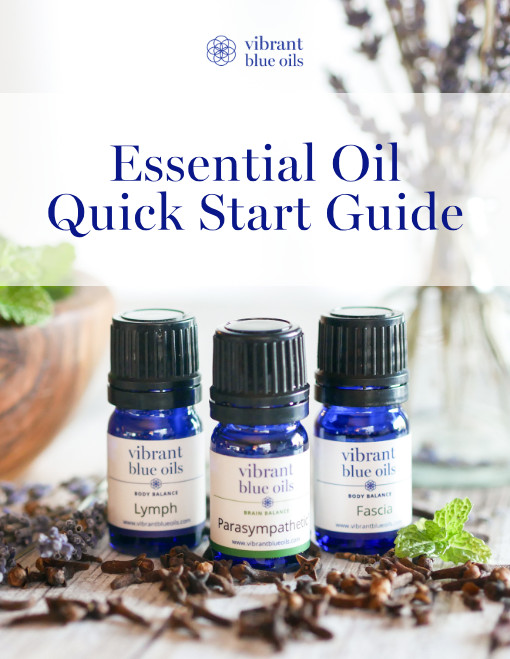
Topically applying Parasympathetic® behind the earlobe on the mastoid bone can stimulate the vagus nerve, where it is most accessible to the surface of the skin, and turn on your safety response. We recommend applying Parasympathetic® to vagus nerve three times daily.
In addition to the Parasympathetic® blend, which helps to calm the fight or flight response, Kidney Support™, when applied over your kidneys (one inch up and out from belly button), back of neck, or around the outside of earlobes, can help dispel fear and assist you in feeling safe.
Fear is often associated with your kidneys, two bean-shaped organs that sit on top of your adrenal glands and regulate the balance and flow of fluids in your body by selectively filtering out or retaining various minerals and electrolytes. In Chinese medicine, fear is associated with the water element, as water is symbolic of your unconscious, or that which you do not understand and therefore might fear. These feelings of fear and paranoia can be held in your kidneys, impairing function. Topically applying Kidney Support™ over your kidneys 2-3 times daily may help calm your fear response.
Sadness
Sadness helps you adjust to a significant loss, such as death or disappointment. Sadness brings a drop in energy and enthusiasm for life’s activities, particularly diversions and pleasures.
Sadness is ideally a transient or temporary experience. This introspective withdrawal may keep you close to home and safe, and create an opportunity to mourn a loss and become aware of and release anything that no longer belongs to you or hurts you, so that when energy returns, you can plan for new beginnings.
As a first step to addressing sadness, it’s essential to feel safe and calm. Parasympathetic® blend helps to calm your nervous system when topically applied over the vagus nerve (behind the earlobe on the mastoid bone).
Once you have calmed your nervous system, you can then begin to release your sadness in small doses. The only way out is through, but there is no rush to get there. Intense feelings are painful to release and sometimes more manageable in small doses—think eye dropper, not fire hose.
Love
Love is often defined as a pleasant emotional state that is characterized by parasympathetic arousal.
The parasympathetic relaxation response generates a general state of calm and contentment, facilitating cooperation, joy, gratification, satisfaction, happiness, and well-being.
Love is an expansive emotion in that it helps to create links with others. If you have experienced heartbreak or betrayal in the past, you may subconsciously limit your experience of love to protect yourself from future hurt. This shutdown also prevents you from experiencing the positive aspects of connection and support.
Essential oils can be powerful tools to help support your ability to receive love and support. They work in the limbic systems to help clear negative feelings and blocked emotions, thus eliminating the root causes of many self-limiting beliefs.
As you take a deep breath and breathe in the following essential oil blends, try to breathe in the deep sense of worthiness and allow yourself to receive love. As you slowly exhale, allow your breath to carry out any patterns of low self-worth or self-limiting beliefs.
Apply 2-3 drops of Heart™ directly over the heart (left side of chest) to balance the heart and support, integrate, and reset all the systems of the body, including mental clarity, physical health, and emotional balance. Heart™ blend also supports feelings of open-heartedness, expansiveness, and receptivity while mitigating loneliness, sadness, and grief.
During times of intense sadness, use as often as is needed (every 20 -30 minutes). During times of everyday stress, use 2-3 times daily to calm and uplift the heart and the body.
Featured Oils:
Ready to get started? Click the links below to order today:
- Heart™ available here
- Kidney Support™ available here
- Liver Support™ available here
- Parasympathetic® available here