
- Anosmia is the partial or complete loss of the sense of smell, meaning you are unable to detect odors.
- Hyposmia is a reduced sense of smell. Odors may seem less intense, or you may need higher odorant concentration to sense them
- Parosmia is a distortion in odor perception. Smells are still detected, but they seem altered or smell different. For example, flowers may smell like soap, or coffee may smell metallic.
- Cacosmia is a type of parosmia in which odors smell distinctly foul or unpleasant. Foods and beverages may smell spoiled or rotten for no obvious reason—for example, meat may smell like garbage, or coffee may smell like rotten eggs.
- Phantosmia refers to smelling odors that are not actually present. These olfactory hallucinations can sometimes occur as an aura before a migraine or seizure.
- Trigeminal sensation refers to the sensory, non-scent aspects of smells—such as cooling (menthol), warming, burning, tingling, or irritating feelings detected by trigeminal nerve, whose branches are found in the nose, tongue, and mouth. While the olfactory nerve identifies the odor itself, the trigeminal nerve detects its chemical intensity, contributing to the perception of “sharpness” or “warmth” in smells —like the coolness of menthol or the burning sensation of chili peppers and mustard. Even if your sense of smell is impaired, you may still perceive these sensations that contribute to the “smell” experience.
- Flavor is often confused with taste, but it is actually a combination of smell, taste, trigeminal sensation, texture, and temperature. This is why food can seem bland or “tasteless” when your sense of smell is reduced.
- Taste refers specifically to the basic sensations detected in the mouth: sweet, salty, sour, bitter, and umami (savory).
- Nasal occlusion: the air passages in your nostrils (one side or both) are totally or partially occluded by congestion or inflammation from a cold, infection or allergies. This inflammation then blocks air and odorants from reaching the olfactory receptors.
- Virus (like COVID-19) or other pathogens directly damage the olfactory sensory neurons or other cells in the olfactory epithelium – the nasal region that detect the odors.
- Lemon or Orange (fruity),
- Rose or Lavender (flowery)
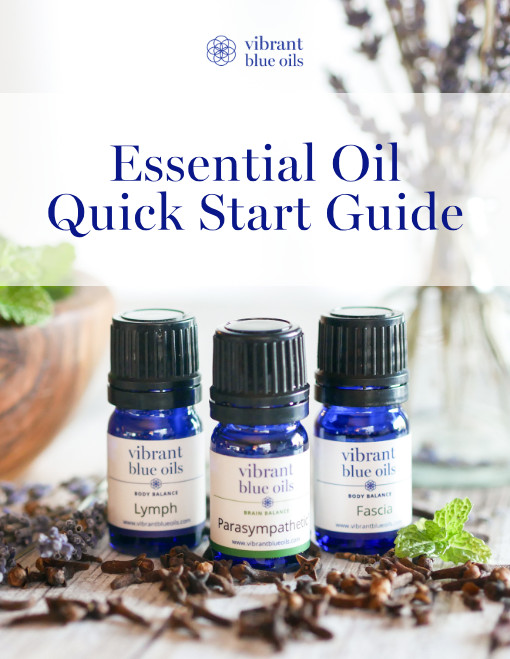
- Parasympathetic®, Adrenal® or Focus™ (Spicy)
- Peppermint (minty)
- Lemon – Click here
- Rose – Click here
- Parasympathetic® – Click here
- Adrenal® – Click here
- Focus™ – Click here
- Peppermint – Click here
- https://pmc.ncbi.nlm.nih.gov/articles/PMC5915822/
- https://pubmed.ncbi.nlm.nih.gov/34827390/
- https://pubmed.ncbi.nlm.nih.gov/31077241/
- https://pubmed.ncbi.nlm.nih.gov/20231262/
- https://pmc.ncbi.nlm.nih.gov/articles/PMC10117949/
- https://pubmed.ncbi.nlm.nih.gov/39464255/
- https://pubmed.ncbi.nlm.nih.gov/32901616/
- https://pubmed.ncbi.nlm.nih.gov/41477097/
- https://link.springer.com/article/10.1007/s11065-022-09573-0
I have been flooded with questions lately about loss of smell and how essential oils might be used to help retain olfactory neurons and restore your sense of smell.
Your sense of smell is deeply correlated with mental, physical and emotional health.
Smell goes beyond enjoying pleasant aromas — it’s deeply wired into your brain’s emotional centers, impacting your appetite regulation, your social bonds, and even your sense of safety.
Research shows that olfactory impairment is strongly linked to depression, social anxiety, and reduced quality of life.
Fortunately, inhalation of essential oils can help maintain and restore olfactory health.
What Does Loss of Smell Look Like?
Smell loss and olfactory alterations can take many forms, often presenting as a temporary side effect of a cold or sinus infection or broader spectrum of conditions, including:
What Causes Loss of Smell?
Loss of smell may occur as a result of the following conditions that affect receptors in your nose, including:
Viral infections (flu, Covid-19, etc.), inflammations, cold, rhinosinusitis, and polyps. It is hypothesized smell loss may occur when the olfactory region in the nose is regenerating, and the process is not yet fully complete.
For example, in cases of:
Head trauma, accidents and injuries (including Traumatic brain injury) that cause a damage to olfactory nerves – the connection between the olfactory area in the nose and the brain – or brain trauma involving areas responsible for odor recognition and smell perception.
Neurodegenerative Conditions: Loss of smell or smell reduction can be an early symptom of Alzheimer’s disease, dementia, Parkinson’s disease, or multiple sclerosis, and these diseases are often associated with smell loss.
Aging: Our sense of smell fades as we age, so people age 50 and older may contribute to loss of smell or smell reduction.
Neurological Physical Obstructions: Inflammation of the olfactory region after surgery for a deviated septum, brain tumour, or nasal polyps may block odorants from reaching the olfactory nerve. In the case of surgery, olfactory receptors may not have been correctly replaced, only partially, or not properly reconnected to the olfactory areas in the brain.
Other Factors: Smoking, nutritional deficiencies, or certain medications, such as antibiotics and antihistamines, can impair smell
Potential Consequences of Loss of Smell
Your sense of smell plays an important role in many areas of life – contributing to social communication, guiding dietary choices and helping you avoid toxins and environmental hazards, according to research. Loss of smell can result in reduced well-being and quality of life, contributing to:
Loss of Taste and Enjoyment of Food: Your sense of smell is responsible for about 80% of what you taste. Without a sense of smell, food is often bland and tasteless, which contributes to a lack of interest in cooking, eating, and trying new foods.
Nutritional Deficiencies: Reduced enjoyment of food may lead to weight loss or malnutrition. What’s more, loss of smell may significantly influence the quality of digestion.
Safety Risks: Sense of smell protects you from potentially injurious threats to safety and life, such as a gas leak, spoiled food, or smoke. Without it, you may feel more vulnerable to unforeseen events, like household accidents. It can also contribute to chronic feelings of insecurity and worry about safety
Social anxiety: The inability to detect one’s own body odor may contribute to fear of “smelling bad” and amplify feelings of social insecurity.
Mental Health Impact: Depression and anxiety are common due to loss of sensory enjoyment and pleasure in life. Due to the shared neural pathways and overlapping brain circuits between olfaction and the emotional seat of the brain (known as the limbic system), the loss of smell correlates with higher rates of depression. It is also suspected that reduced sensory input leads to imbalanced neurotransmission in limbic/reward circuits. More specifically, research on “Association of alterations in smell and taste with depression in older adults” shows that nearly 40% of people with major depression experience altered sense of smell — almost double the general population.
Social Communication & Relationships: Body odors (known as pheromones) signal genetic compatibility and influence mate choice. The smell of a partner can help cement your connection with that person or attract you to him or her in the first place. Smell is also thought to contribute to sexual arousal and desire. Loss of smell has been found to negatively impact romantic/social relationships, contributing to fewer sexual relationships and increased insecurity about partnerships
Diminished Psychological Health: Sense of smell is a critical way in which humans interact with the world. A smell can immediately trigger the memory of an important event in your life and the positive (or negative) emotions associated with that event. An underlying sense of insecurity exists when you cannot smell yourself or the immediate known surroundings. This disconnection creates the potential for a certain loss of self and a psycho-emotional disconnection from the world.
Declining cognition: There’s a very well-identified link between smell sensitivity, memory, and cognition. In the use it or lose it model, using your sense of smell is important for the health of the brain. What’s more, improvements in smell sensitivity can lead to improvements in memory and cognition. Loss of smell is often the first sign of cognitive decline. Researchers in San Diego and Germany use odor sensitivity to predict risk of cognitive impairment, noting that weaker sense of smell correlated with deteriorating cognitive performance, including memory.
There seems to be a direct connection – as smell sensitivity weakens, then so also does the brain stimulation that accompanies it. If we’re not using our sense of smell, the brain regions that it stimulates and trains don’t get that same stimulation. So they weaken, like a muscle we don’t exercise. Indeed, studies now show that olfactory dysfunction – a disturbance in our sense of smell, ranging from partial loss to total loss – is related to loss of grey matter volume in key brain regions associated with cognitive performance and memory.
Loss of smell has now been linked with 139 conditions, including cardiovascular disease, arthritis, polycystic ovary syndrome, Parkinson’s disease, and Alzheimer’s. But recent research suggests that smell training might be able to help. Just as we go to the gym and do reps, we can do “reps” of smelling.
Olfactory training
Olfactory training with essential oils may help accelerate smell recovery.
Olfactory training (or smell training) is a structured, rehabilitative therapy designed to recover or improve a diminished sense of smell by repetitively exposing the nose to strong odors, like essential oils.
Essential oils are used as olfactory stimuli – essentially acting like “physical therapy” for the nose – to strengthen the connection between the nose and brain.
Olfactory training has been found to promote the regeneration of the olfactory receptors and helping to rewire and reinforce the cognitive pathways in the brain that allow it to remember and to discriminate odors.
Studies show that consistent training helps improve smell, with some research indicating over 60% of post-viral patients saw improvements. For example, research on the “Impact of Olfactory Training on Cognitive and Emotional Function in Individuals with Parkinson’s Disease” found that participants who inhaled the essential oils had significant improvements in their sense of smell, but also in their memory and cognition scores, as well as reductions in depression and anxiety.
Similarly, the review “Does Olfactory Training Improve Brain Function and Cognition?” found that smell training leads to improvements in overall cognition, verbal fluency, and verbal learning & memory in particular. According to brain scans, these gains were accompanied by significant physical changes in brain regions, including the olfactory bulb, hippocampus (memory), and increased connectively with other important brain regions related to cognition and mental performance.
How to Perform Olfactory Training
The olfactory training consists in a daily routine smelling 4 odors twice a day. While smelling, it helps trying to visualize the source of scent and keep track and notes of feelings, sensations and any progress or perception. The training should last for at least 4-6 weeks.
The Scents: The standard protocol uses four essential oils:
The Routine: Hold each scent a few inches from the nose and gently inhale for roughly 10-15 seconds, with a 10-second rest between each scent
Frequency: Do this twice daily (morning and evening). I keep my oils by my toothbrush and practice smell training when I brush my teeth upon waking and before bed.
Duration: The training should be maintained for at least 12 to 16 weeks, though it can be continued for up to 2 years for optimal results, as recovery is slow. That may sound like a long time to train your nose, but when you train to get physically fit, you don’t just go to the gym a few times, then quit. You have to keep it up. Sometimes, significant gains take a few months or more to become obvious. It’s the same with smell training. Although results do often come more quickly. The key with smell training is to make smelling a habit so it doesn’t feel like training.
Bonus Training: When you’re out and about, make a point of noticing the scents around you. Coffee, Grass, trees, flowers, auto exhaust, people’s perfumes or the air itself.
Featured Oils:
Ready to get started? Click the links below to order today: