
- Emotional processing
- Stress hormone regulation
- Autonomic nervous system state
- Memory consolidation and recall
- Reduce stress markers such as cortisol
- Increase parasympathetic signaling and autonomic balance
- Lower sympathetic nervous system activation
- Improve mood and emotional resilience
- Influence heart rate and autonomic function
- Parasympathetic® – Click here
- Limbic Reset™ – Click here
- Fascia Release™ – Click here
- Lavender™ – Click here
Smell is one of the most powerful and underutilized tools for regulating your nervous system.
Your olfactory system has a direct connection to your brain’s stress and emotional centers — and specific scents produce measurable, biochemically documented changes in stress markers in the brain, according to research on “Smell and Stress Response in the Brain”.
This is why smell doesn’t just feel calming — it measurably changes brain chemistry associated with stress, neuroinflammation, and mood.
How Smell Supports Nervous System Regulation
As you may know, the nerve in your brain that controls your sense of smell is called your olfactory nerve.
This nerve runs from your nostrils through the back of your nose to your brain, where it connects to the emotional center of your brain, known as your limbic system.
Unlike other senses, smell bypasses the brain’s central relay station (the thalamus) and has a direct, high-speed connection to 3 key limbic structures: the amygdala (which processes emotion) hypothalamus (which helps regulate your stress response) and the hippocampus (which creates and retrieves memories). This direct access helps explain why scent inputs trigger such an immediate emotional reaction, often before your conscious mind even identifies the smell. This gives smell uniquely fast, unmediated influence over:
The Unique Chemistry of Essential Oils
The rapid and potent influence of scent on mood, cognition, and physiological states can be attributed to the chemistry of essential oils. More specifically, with the molecular components that make up essential oils are so small that they are known as volatile, meaning they easily evaporate at normal temperatures, and aromatic, meaning they circulate in the air where your nose can detect them as a smell or be absorbed through the skin in oil form
These compounds exert a pharmacological effect when they penetrate the body either through your skin or through your olfactory nerve. According to research, “Monoterpenes are the main volatile component of plant essential oils. Olfactory receptors may recognize monoterpenes as smell and affect emotions. It is possible that the components of the essential oil act directly on the central nervous system as well as on the olfactory pathway.”
When you inhale, these volatile compounds travel directly to the emotional part of the brain. Inhaling molecules that have a pharmacological effect is the fastest way to impact your brain – faster than eating something or swallowing a pill.
Anything you ingest has to be digested to then get into your bloodstream. Your bloodstream is like the highway to take things to your organs. But a gas – like the volatile compounds in essential oils – can be absorbed directly by the nerve and have a straight shot to the brain, bypassing the blood highway.
In other words, scent offers the fastest nervous system access of any sensory modality.
Inhalation Bypasses Your Blood-Brain Barrier
The blood-brain barrier is a highly selective, semi-permeable border that surrounds most of the blood vessels in the brain and serves as a protective barrier between circulating blood in your body and the entrance to your brain.
The blood-brain barrier is composed of endothelial cells wedged extremely closely together that act like a sieve or filter through which only molecules of a certain size or smaller can penetrate.
This border prevents certain damaging substances from reaching brain tissue and cerebrospinal fluid (or CSF, a clear fluid that surrounds and protects the brain), while allowing essential molecules, like oxygen and nutrients, to enter.
The narrow space between the cells of your blood-brain barrier are known as tight junctions, which prevent all but very small fat-soluble molecules and some gases from passing through the capillary wall and into brain tissue. For this reason, it has been challenging, historically, to get the right remedy into the right region of the brain. Most conventional drugs are neither small enough nor fat-soluble. Only a few substances—including gases like oxygen, carbon dioxide, alcohol, some drugs, anesthetics, and essential oils—are capable of accessing the brain in this way.
The molecular components that make up essential oils are both very small and fat-soluble, allowing them to pass through the blood-brain barrier. As mentioned above, essential oil molecules are so small that they are known as volatile, meaning they easily evaporate at normal temperatures, and aromatic, meaning they circulate in the air where your nose can detect them as a smell.
After passing through the blood-brain barrier, fat-soluble essential oil molecules easily penetrate through the cell membranes and enter brain cells, which are also composed primarily of fat. An article published in Pharmaceuticals called “Effect of Essential Oils on Pathogenic Bacteria,” describes how essential oils easily penetrate cells and act on both the cell membrane and within the cell, causing alterations in structure and functionality.
Many people are surprised to learn that olfactory cells are brain cells, and the olfactory membrane in the nasal cavity is the only place in your body where the brain is directly exposed to the environment.
What’s more, the blood-brain barrier is the thinnest around the olfactory nerve. Your blood-brain barrier is approximately eight cells in thickness across most of the brain. Around your olfactory nerve, it is only four or five cells thick. This is the reason inhalation is cited as the most efficient channel into the brain. Once inhaled, molecules can enter the brain directly via the nasal olfactory pathway or indirectly through the circulatory system after they penetrate the lung tissue. This may help explain why anesthesia is commonly administered by inhalation.
Research backs this up. Findings in “Smell and Stress Response in the Brain” note that essential oil molecules physically cross into the brain and act as neuropharmacological agents. What’s more, “the biological effects of fragrant molecules can include not only the olfactory pathway, but also the blood flow due to nasal and transdermal absorption of volatile molecules.”
Smell Can Shift Autonomic Nervous System Activity
Your sense of smell is closely linked to your nervous system, which controls the unconscious functions in the body, as well as affecting emotions.
The nervous system is constantly evaluating whether the environment feels safe or threatening. Scent acts as a neurological input that helps the brain perceive safety – determining whether it should stay in protection mode or shift toward repair and recovery.
More specifically, research shows that unpleasant odors can activate stress responses and sympathetic activity, while pleasant scents can promote relaxation and reduce physiological markers of stress. The relationship is bidirectional — the autonomic nervous system shapes how you smell, and smell shapes autonomic state:
The olfactory epithelium is extensively innervated by both sympathetic nerve endings (releasing norepinephrine) and parasympathetic nerve endings (releasing acetylcholine). Because olfactory sensory neurons have both adrenergic and muscarinic receptors in addition to odorant receptors, autonomic stimulation can substantially regulate the earliest steps of olfaction itself.
Research also suggests that olfactory inputs can influence vagally-mediated functions. For example, when exposed to a pleasant odor, the parasympathetic nervous system responds with measurable activation, while an unpleasant, aversive odor causes non-invasive stress. Pleasant odors promote healing and relaxation.
Smell is considered the “emotional sense” because odors can trigger physiological responses before conscious thought occurs, meaning that it may influence the parasympathetic nervous system at both the conscious and subconscious levels.
Beneficial Smells for Nervous System Regulation
Certain scents can influence autonomic nervous system balance and promote physiological states associated with parasympathetic activity. Research has found that pleasant aromas can:
Studies have demonstrated stress-supportive effects of lavender, bergamot, rose, citrus oils, cypress, cedar, and other plant-derived volatile compounds.
Lavender: The anxiolytic (anxiety reducing) effects of lavender oil are attributed to multiple mechanisms, including the healing compounds of linalool and linalyl acetate which are thought to play a role in increasing serotonin levels and interacting with the hypothalamic–pituitary–adrenal axis to lower the level of stress hormones like cortisol.
Exposure to lavender or rose oil increases activity in the olfactory bulb which has been associated with enhanced sensory integration and emotional processing, which facilitates rapid transmission of olfactory information to higher brain regions involved in mood and affect regulation. Research on The Effect of Lavender Aromatherapy on Autonomic Nervous System in Midlife Women with Insomnia found that lavender inhalation increased parasympathetic nervous system activity and reduced sympathetic activity, which suggests that scent can influence autonomic regulation through neural pathways rather than simply psychological expectation.
Bergamot: Inhalation Aromatherapy via Brain-Targeted Nasal Delivery: Natural Volatiles or Essential Oils on Mood Disorders found that when inhaled, anxiolytic and sedative effects of bergamot essential oils reduced cortisol levels, tension and anxiety markers while improved positive mood. Interestingly, physiological changes occurred rapidly after inhalation, supporting the idea that olfactory stimulation can quickly affect nervous system state.
Citrus: Research on the Therapeutic Effect and Mechanisms of Essential Oils in Mood Disorders: Interaction between the Nervous and Respiratory Systems associated essential oils derived from citrus fruit with improvements in mood and depressive symptoms. The research noted that citrus scents may strengthen the brain’s association between that scent and physiological relaxation. Specifically, sweet orange reduced anxiety and pain and lowered salivary cortisol levels. Neroli demonstrated lower anxiety and perceived pain.
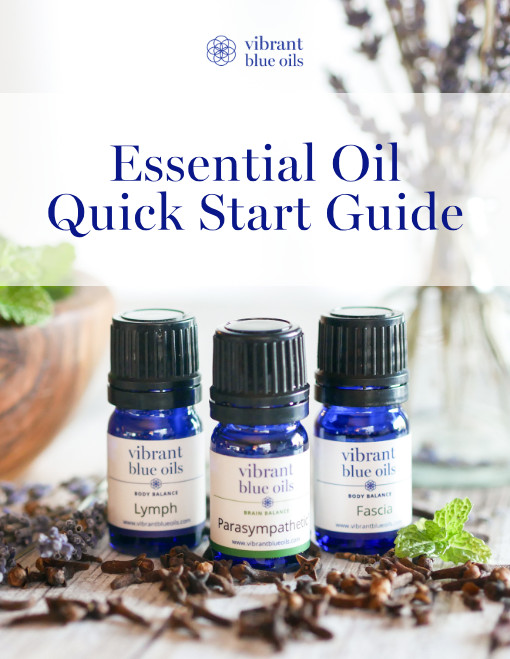
Parasympathetic®: Essential oils can signal safety to the body. Your vagus nerve is your body’s internal safety signal. As the main pathway of the parasympathetic “rest and digest” system, it helps calm the body, reduce stress hormones, slow the heart rate, and support digestion and healing. When you activate the vagus nerve—by applying Parasympathetic® oil behind the earlobe—you tell your body: “You’re safe now. It’s okay to relax and heal.”
Parasympathetic® is a blend of clove and lime essential oils.
Lime, which is a key ingredient in the Parasympathetic blend contains active compounds (like d-limonene) that directly stimulates the limbic system—the brain’s emotional center. Lime essential oil also has high levels of beta-pinene, which has been found to promote healthy brain chemical balance and reduce sad feelings. Pinene is neuroprotective, with anti-inflammatory and anti-oxidant properties,
Clove extracts have been suggested to modulate neurotransmitter levels in the brain. In particular, eugenol may influence neurotransmitter systems and support the health of the parasympathetic nervous system. According to research on Neuroprotective Properties of Clove, Clove contains “key bioactive compounds such as eugenol, α-humulene, β-caryophyllene, gallic acid, quercetin, and luteolin demonstrate antioxidant, anti-inflammatory, and neuroprotective properties.”
Topically applying stimulatory essential oils, like Parasympathetic®, behind the earlobe on the mastoid bone can stimulate the vagus nerve where it is most accessible to the surface of the skin.
Limbic Reset™ Contains Lavender and Melissa which helps activate the nervous system. Inhaling essential oils is the fastest and most efficient way to reset the volume of threat perception and help calm the over-firing of your limbic system. This is because smell can access the limbic system of the brain to lower limbic system activation, which then enables your body to enter the parasympathetic “rest, digest, and repair” state.
Limbic Reset™ contains a proprietary blend of essential oils designed to calm threat arousal and send safety cues to help reset your limbic system and support healthy emotional regulation. Limbic Reset™ was specifically formulated with essential oils such as Frankincense and Sandalwood that contain the chemical constituent Sesquiterpenes, which are thought to help increase the oxygen in the limbic system, which in turn “unlocks” the DNA and allows emotional baggage to be released from cellular memory.
The citrus oils contained in Limbic Reset™ help to lift your mood and clear your energy so that you do not take on or carry negative emotions or a pessimistic mindset toward others. For example, Melissa is known as an antidepressant that possesses uplifting and emotionally balancing compounds. Inhale or topically apply to the base of the skull, on the forehead or behind the ears.
Fascia Release™: Essential oils are a powerful tool to help “unwind” your fascia to move your mind and body out of a “frozen” traumatized state, gently releasing restrictions so that your body does not have to protect itself. Essential oils can help emotionally signal your body that you’re “safe” and physically remove restrictions, rehydrate the fascia, restore elasticity, and widen the space between the fibers to improve circulation and help blood and oxygen flow smoothly around the body again.
Fascia Release™ also helps open up the space around your physical body. Releasing fascia constriction in the back of the body, specifically between the shoulder blades at the back of the heart, helps to physically release fascial constrictions and adhesions around the heart that may help open the heart for the healthy flow of emotional energy.
The essential oils in Fascia Release™ are uniquely formulated to simultaneously work on physical and psychological levels, working quickly to break down inflamed, fibrous tissue, removing toxins while unraveling deeply held tensions, constrictions and energetic blockages in your tissues to reduce pain, improve blood and lymphatic circulation and release fear, repressed emotions, and tension held in the body (organs, muscles, tendons, bones and joints) or the mind.
Fascia Release™ is formulated with several of the oils that are known to support nervous system regulation, including Lavender, Rose, Citrus oils like Litsea Cubeba, Elemi, Cypress and Rosemary.
Featured Oils:
Ready to get started? Click the link below to order today: